
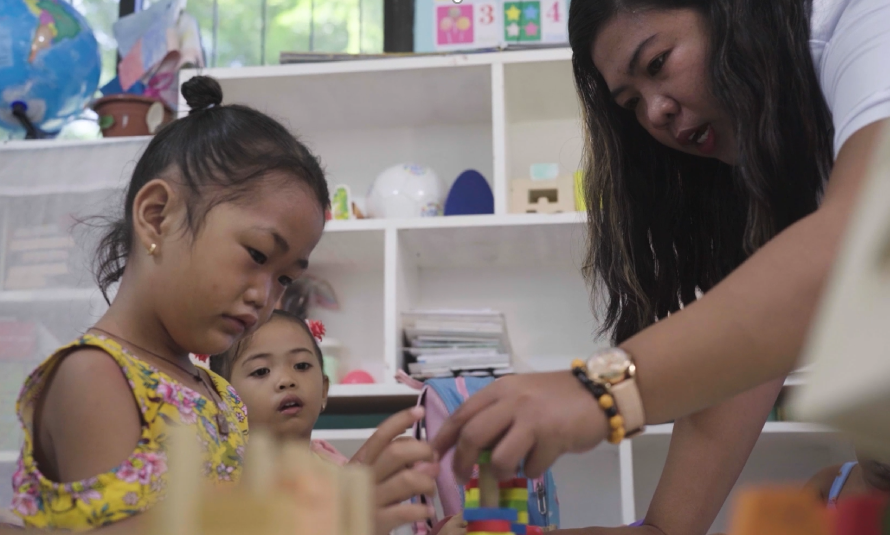
Building Brighter Beginnings: Transforming Early Childhood Development on a Remote Island
Imagine a small boat slicing through the waves to reach Zumarraga, a remote island in Western Samar, Philippines. For years, bumpy roads and scarce transport have kept families isolated from reliable healthcare and essential early childhood support. Yet, today, meaningful progress is being made in Zumarraga on the island, transforming the future for hundreds of children and their families.
Supported by Quantedge Advancement Initiative, Plan International launched a two-year early childhood development project (the “ECD Project” or the “Project”). By combining practical training, community mobilisation, and system strengthening, the Project has empowered families and frontline workers to deliver gender-responsive, nurturing care for young children.
Tackling Distance and Removing Barriers to Healthcare and Early Childhood Care
The geographical isolation of Zumarraga, marked by inconvenient transport and limited social resources, has made it difficult for parents to access reliable early childhood services. Many families have watched their children suffer from malnutrition or miss critical vaccinations simply because a doctor or nurse was not available when needed.
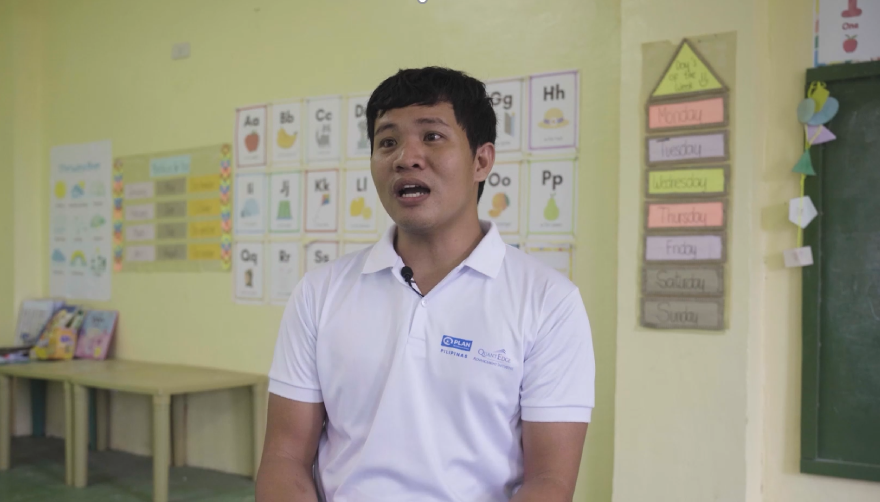 西Edmond, Western Samar Barangay Official, explained that malnutrition affected one or two out of every ten children in Zumarraga, and families often arrived for check-ups to find no doctor or nurse available, a reminder of the island’s urgent need for reliable health services.
Thanks to the support of Quantedge Advancement Initiative, the ECD Project ran from January 2024 to December 2025 to address these systemic gaps. Its primary mission was to empower caregivers, with a specific focus on fathers, equip frontline workers, and strengthen local systems. Ultimately, the programme reached 1,710 parents and caregivers, surpassing the original target of 1,500 by 14%. Furthermore, it engaged 468 girls and boys (aged 0–4) and worked with 160 local government personnel and service providers across 10 barangays in Zumarraga.
From Awareness to Action: Building Knowledge and Skills that Trigger Change
At the outset, the situation was concerning. Baseline assessments revealed that only 13.74% of parents and caregivers knew how to recognise developmental delays and seek appropriate help. Moreover, local governments struggled with inconsistent practices regarding Early Childhood Care and Development (ECCD) checklists, limited materials, and uneven coordination across sectors. Frequent turnover among day care workers further undermined the continuity of care.
However, once mapping exercises confirmed these gaps in Maternal, Neonatal, Child Health and Nutrition (MNCHN) and Sexual and Reproductive Health and Rights (SRHR) delivery, the Project was able to prioritise targeted action. By the Project’s conclusion, the number of caregivers capable of identifying developmental needs had soared from 13.74% to 86.29%. Notably, the capability of male caregivers leapt from 11.43% to 82.76%, demonstrating that fathers are eager to engage when provided with the right knowledge and encouragement.
The change is visible on the ground. “I have observed various problems before Plan International Philippines arrived, [our constituents] have no knowledge yet about child development and health,” said Aina, a Child Development Worker in Zumarraga. “The most important thing I learned was having an ECCD checklist… Every day, we have an assessment with the mothers… What I learned and gained from this Project is that I became active in encouraging parents about learning.”
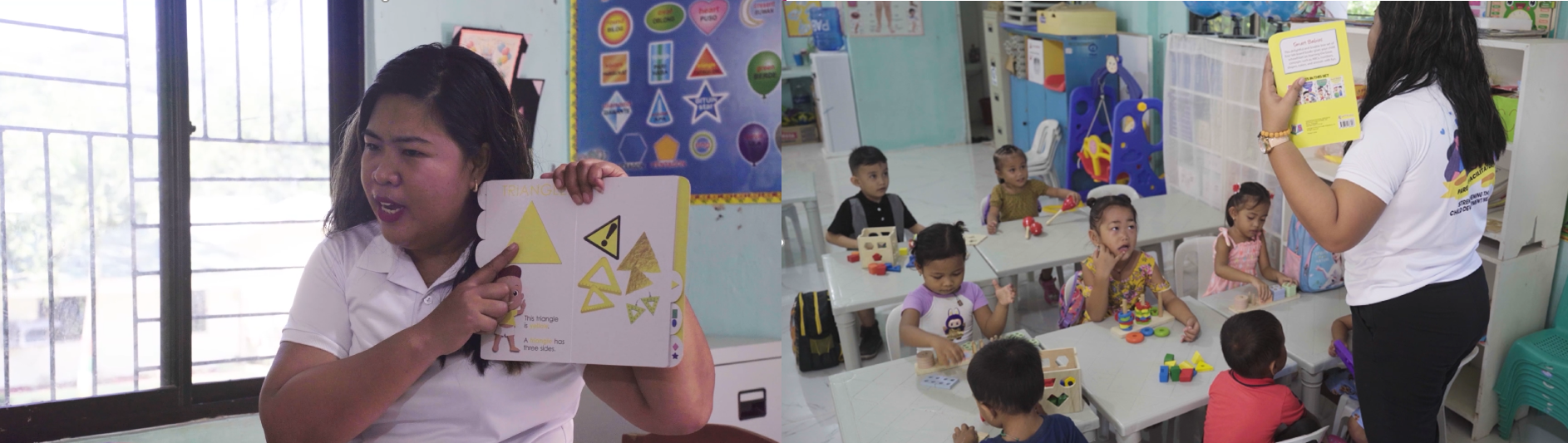 Aina, a Child Development Worker, highlighted that the ECCD checklist has become her most valuable tool, enabling daily assessments with mothers and turning her into an active advocate who encouraged parents to support their children’s learning and development.
Championing Equal Care at Home and Building Community Ownership for Parents
Building on this momentum, targeted fatherhood activities inspired 46 men to complete gender-responsive parenting training. Several of these men have emerged as champions, actively encouraging other fathers to share caregiving responsibilities equally. Consequently, parent support groups have flourished across the ten barangays, becoming vibrant spaces where families exchange practical wisdom on nutrition, play, and emotional support. The parent support groups now provide safe, regular spaces for families to share practical approaches to feeding, caregiving and coping, and to support children with developmental concerns.
Margie, a passionate participant in the parent support groups, attended every seminar available. “I always join activities about ECCD, MNCHN, and Prevention, Early Identification, Referral, and Intervention of Delays, Disorders, and Disabilities in Early Childhood (PEIRIDDDEC) to broaden my knowledge. My dream is for this Project to expand even more—I hope it spreads throughout the Philippines,” shared Margie. Her enthusiasm is infectious, serving as a powerful reminder that individual commitment can spark wider transformation.
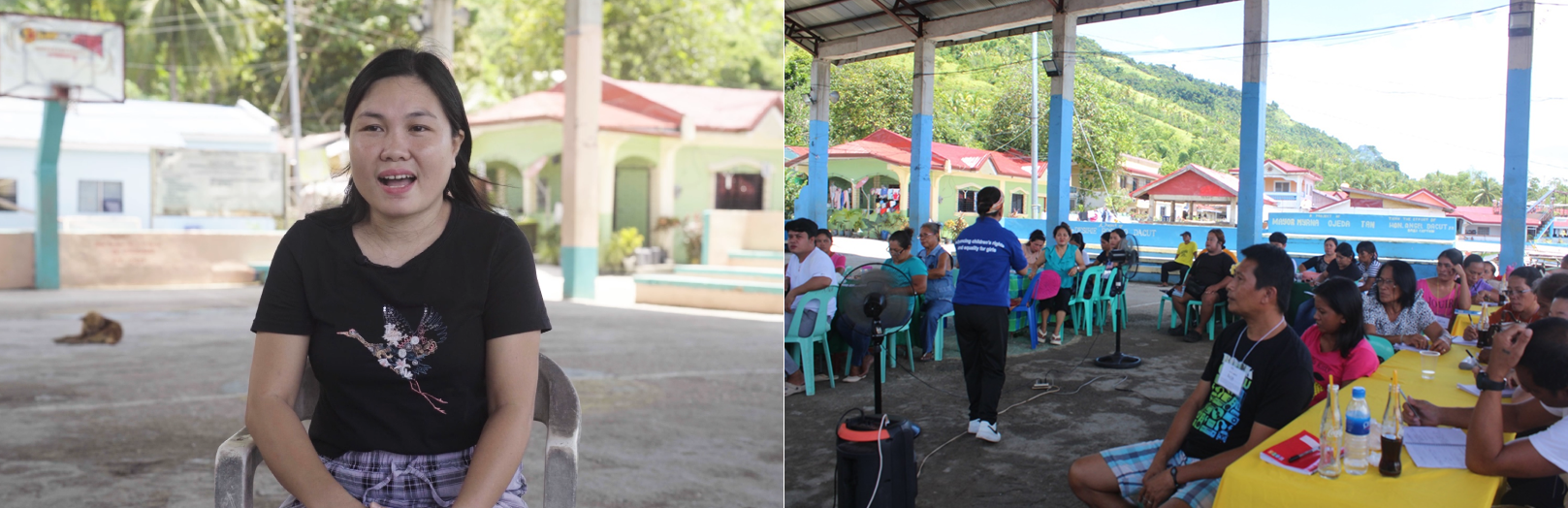 Margie actively attended sessions on ECCD, MNCHN and PEIRIDDDEC to expand her knowledge, expressing her dream that the Project will one day reach communities across the entire Philippines.
Smoother Referrals and Stronger Systems That Families Can Trust
Crucially, the ECD Project built lasting systemic change. A newly established referral pathway linked barangay-level workers directly to the Samar Center for Developmental Pediatrics (SCDP), enabling prompt and confident support for children with developmental concerns.
Eleven local government units (LGUs) have committed to sustaining these improvements, including regular reproduction of ECCD tools, hiring of a permanent doctor, providing transport assistance for specialist care, and embedding these practices into official budgets and plans. As a result, barangays delivering strengthened MNCHN and ECCD services increased from 50% to 90%, bringing more consistent health visits, stronger antenatal care, and renewed attention to the critical “First 1,000 Days” of the children’s life.
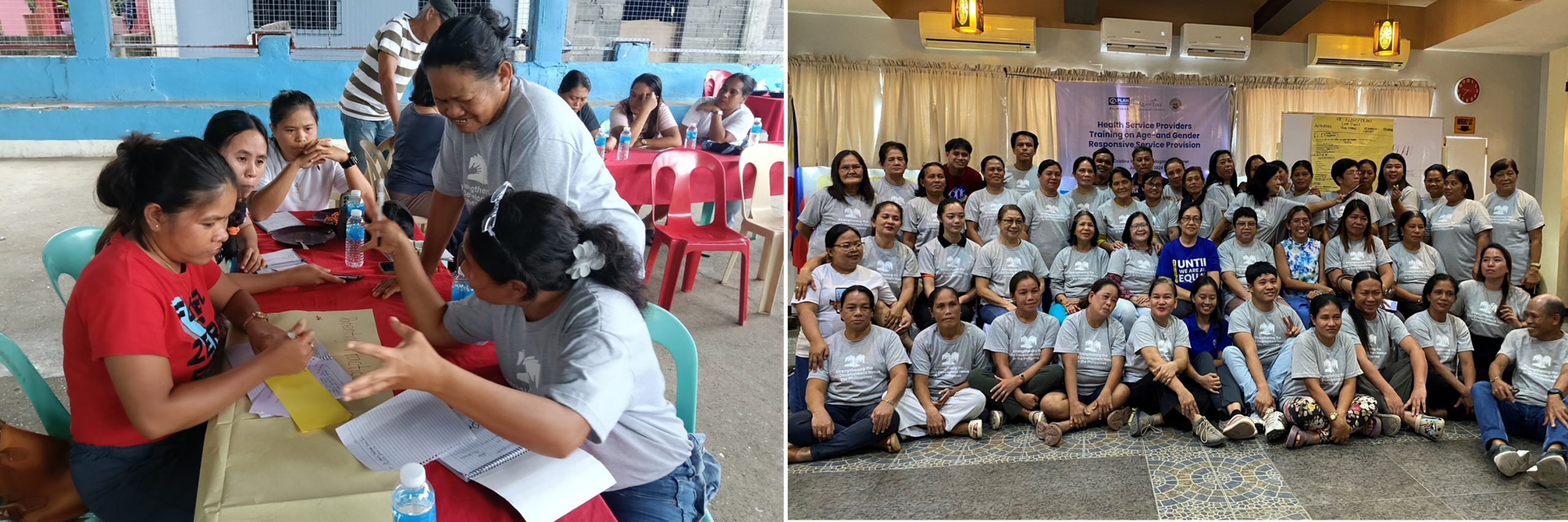 A new referral pathway connected barangay workers directly to the SCDP, and the proportion of target barangays with strengthened MNCHN and ECCD services has risen from 50% to 90%.
Anchoring Change and Keeping Momentum in Communities
The referral pathway with the SCDP offers a robust, scalable model for the future, underpinned by clearly defined roles and trusted collaboration. By embedding ECCD, MNCHN, and referral activities into Barangay Development Plans and Health Committees, LGUs are strengthening policy ownership and securing long-term budget commitments. Furthermore, the parent facilitators and support groups will continue as community-led assets, sustaining peer learning and positive parenting practices.
Today, the success of this initiative is measured not just by the 1,710 caregivers and 468 children who have directly benefited, but by the enduring structures left in its wake: community-led parent groups, skilled facilitators, trusted referral links, and local governments that have embraced these strategies as their own. Thanks to the support of Quantedge Advancement Initiative, the project helped address challenges associated with Zumarraga’s remote location, and demonstrated how knowledge, compassion, and commitment can contribute to better outcomes for children.
