

Humanitarian Crisis in Gaza: Eight-Year-Old Girl’s Father Died Awaiting Supplies | Children Struggling Amid Conflict and Famine
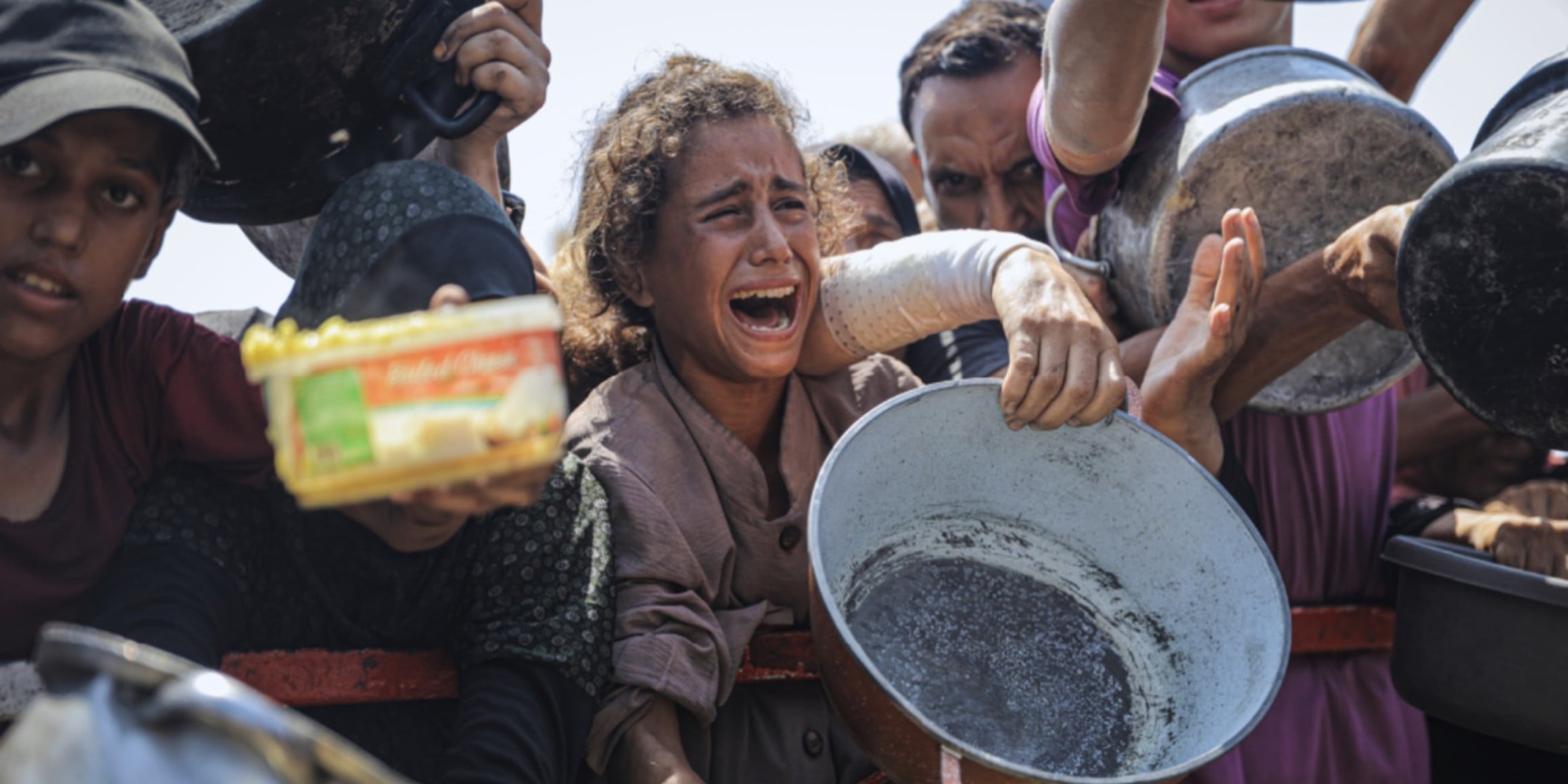
The ongoing conflict between Palestine and Israel, now approaching its second year, has triggered a profound humanitarian crisis. One in ten Palestinians has been killed or injured, with total casualties surpassing 200,000. Of which, the death toll in Gaza has reached 68,000, including more than 20,000 children.
Compounding the conflict, famine has emerged as another critical threat. Since March this year, aid deliveries have been severely obstructed, intensifying an already dire situation of food insecurity across Gaza. On 22 August 2025, the United Nations declared famine in Gaza for the first time. Currently, over 500,000 people face ‘catastrophic’ hunger, a figure that could rise beyond 640,000, signalling the brink of widespread fatalities.
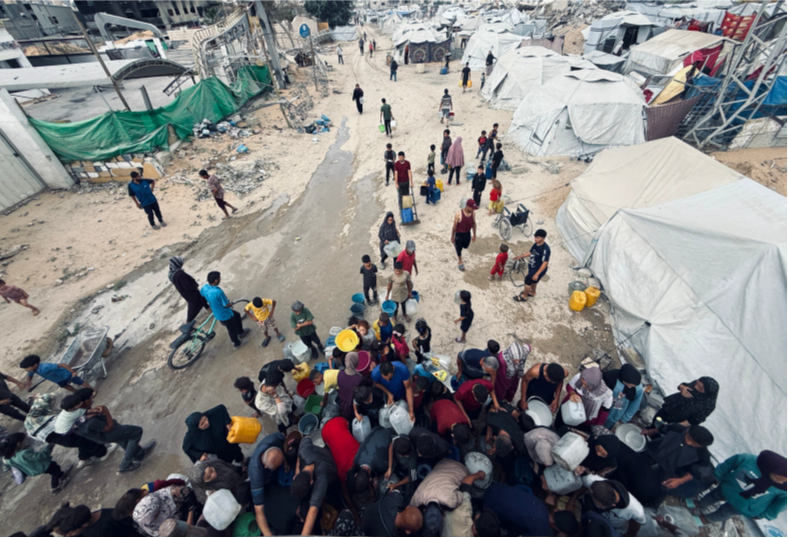 The UN declared famine in Gaza on 22 August 2025, endangering countless children and families.
According to the Integrated Food Security Phase Classification (IPC) by United Nations, famine occurs when at least 20% of households face extreme food shortages; at least 30% of children under five are acutely malnourished; and at least two in ten thousand people per day are dying from starvation or related causes. World Health Organization (WHO) data reveals that in July alone, over 12,000 children were diagnosed with acute malnutrition – the highest monthly total on record and a sixfold increase since the year began.
Eight-Year-Old Girl Finding Solace After Her Father’s Death
This devastation extends far beyond loss of life, displacing 1.9 million people amid relentless safety threats. Essential resources such as food, water, electricity, and fuel are critically scarce, drastically limiting living conditions. The crisis has shattered lives, leaving children like eight-year-old Sara (pseudonym) to bear the weight of profound loss. Sara’s father died while waiting for supplies at the Zikim border crossing in northern Gaza. “Baba left to get a bag of flour,” she recalled, “but he never came back.” Following her father’s death, Sara experienced an enormous emotional void, while her mother was left solely responsible for the family and struggled to shield her family from the dual threats of conflict and famine.
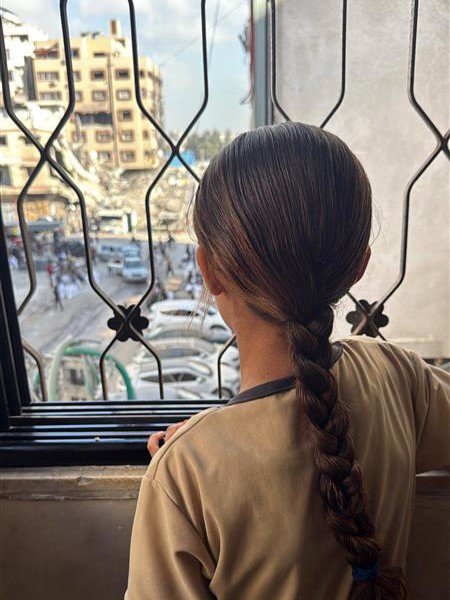 Sara gazed out a window, wrestling with the pain of her father’s death.
Sara, once a lively child, had become quiet and withdrawn. At Plan International’s temporary learning centre in Gaza, our teaching staff noticed Sara’s sudden change in behaviour in class; she was no longer raising her hand to answer questions. Although her books were open in front of her, she was unable to write, unable to cope with the trauma of losing her father.
Recognising that she needed psychosocial support, the teachers provided extra attention and encouragement, helping her to feel less alone. Gradually, with consistent care, Sara began to recover and smile again. For her, the learning centre has become more than a classroom — it is a place of safety and nurture. “We have moved from one house to another, but I feel at home here with those who have helped me,” said Sara, “I want to grow up to be a teacher and give children hope.”
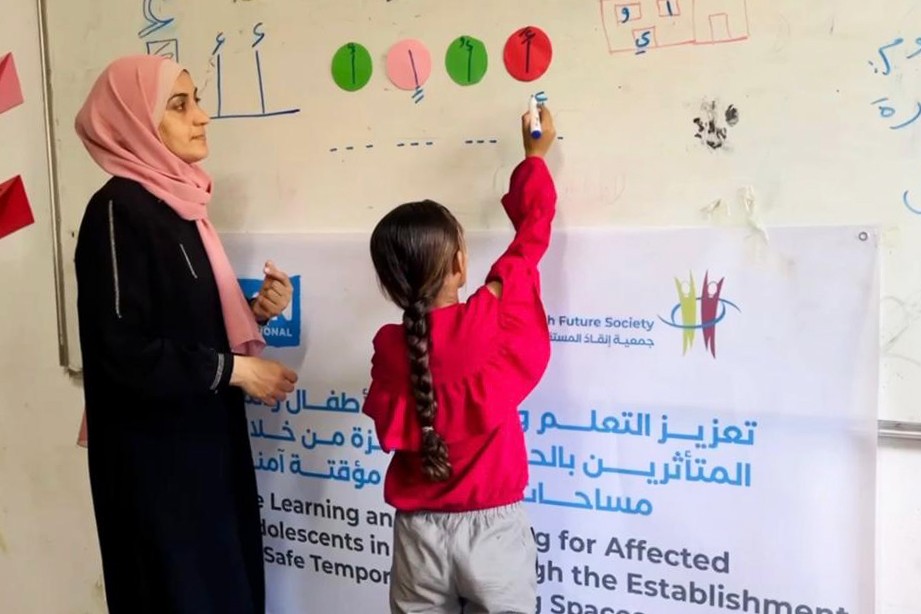 To ensure that children’s education in Gaza is not disrupted by the conflict, Plan International’s temporary learning centre provides education and psychosocial support to children like Sara, helping them to cope with trauma and rebuild their confidence.
Escalating Crisis: Urgent Support Needed to Save Children’s Lives
Sara’s story is just one of many. Recent military escalations have compelled even more families to flee their homes. In sweltering heat, countless individuals have endured gruelling journeys on foot; women and the elderly, often carrying injured children, have walked barefoot for up to nine hours in desperate pursuit of safety.
Dr Kanie Siu, CEO of Plan International Hong Kong, expressed profound sorrow over the crisis. “Countless children and women in Gaza endure unimaginable hardship every day. They suffer the pangs of hunger, growing too weak to walk or sleep. Even more heartbreaking, some children have told their parents, ‘I want to go to heaven, simply because there’s food there.’ Starvation, bereavement, and displacement have become the grim reality for innumerable children. Women live in constant fear of sexual violence, which is deeply alarming. Plan International urgently calls for a complete and permanent ceasefire. Equally vital is the full opening of humanitarian corridors to guarantee unimpeded aid delivery, enabling innocent families and children to access food and reclaim hope.”
With limited humanitarian corridors reopening in Gaza since late July this year, Plan International’s Egypt office has dispatched trucks with food, clean water and supplies to Gaza. 53 trucks carrying 47,000 food packs are ready to depart. Our Jordan office is also working closely with local partners in Gaza to provide emergency assistance. Since August, our relief efforts have benefited over 250,000 people, and we are committed to scaling up assistance to save more children.
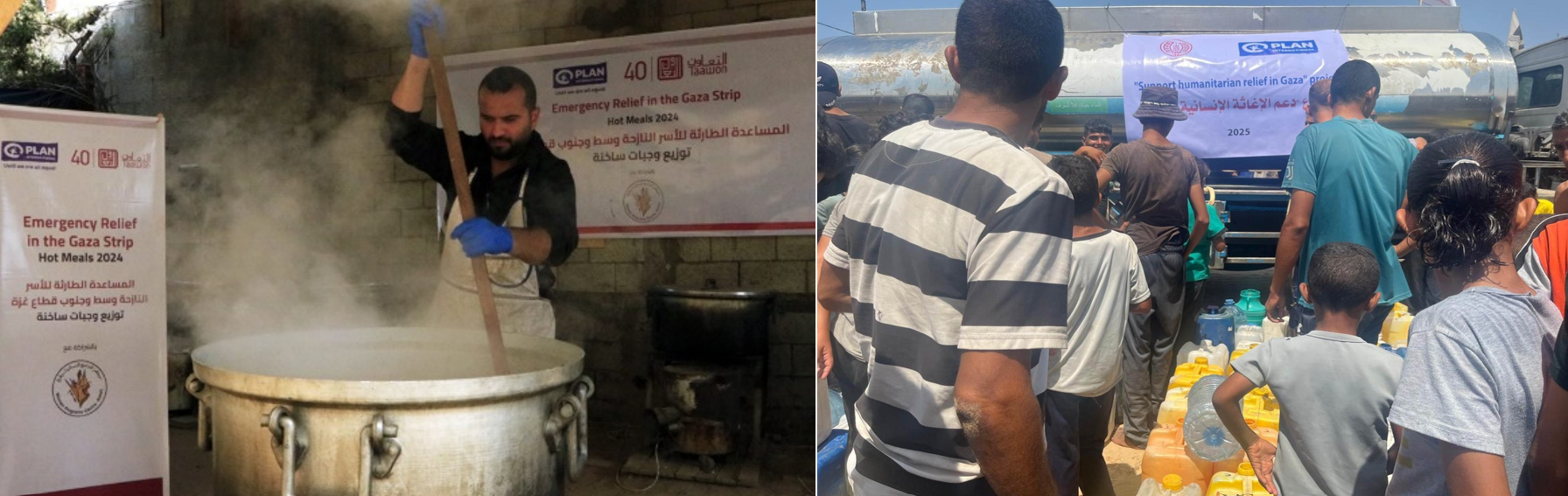 We provided 160,000 individuals with food, including hot meals and food baskets (containing rice, pasta, flour, tuna, cheese etc.); and provided clean water to 45,000 people.
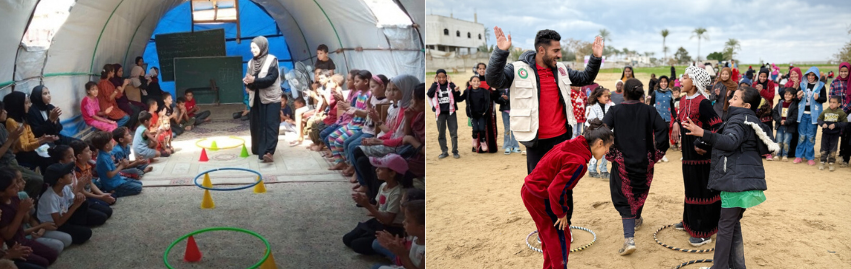 Additionally, we have provided psychological support for over 8,500 children, as well as operating 6 temporary learning spaces.