

Violence Seen as “Natural”: Global Study Finds 90% of interviewed of Girls Endure Abuse From Age 11
Adolescence should be a stage of self‑exploration, building friendships, and planning for the future. Yet in reality, it often becomes the beginning of fear and repression for many girls and boys. The globally discussed TV drama “Adolescence” reveals the cruel truth of adolescence: under the pressure of online misogyny and distorted masculinity, the protagonist views women as objects to be controlled by men. When faced with rejection, he mistakenly sees violence as an outlet, ultimately leading to the tragic killing of a female classmate. Heartbreakingly, this is not just a fictional plot but a real adolescent crisis. Gender‑based violence is permeating teenage life—girls gradually lose freedom and dignity in fear, while boys become lost in violence and repression.
Violence Seen as the Norm – Girls Grow Up in Fear
Plan International released the research report We Shouldn’t Have to Walk with Fear, which followed the growth journeys of 142 girls from nine countries (Benin, Brazil, Cambodia, the Dominican Republic, El Salvador, the Philippines, Togo, Uganda, and Vietnam). From birth to age 18, researchers conducted annual interviews with the girls and their families to understand their attitudes toward violence and gender roles.
The study found that as many as 91% of the girls interviewed had been living under the shadow of violence since the age of 11. This figure echoes United Nations statistics—nearly one‑third of women and girls worldwide (about 840 million) have experienced physical, sexual, or psychological violence.
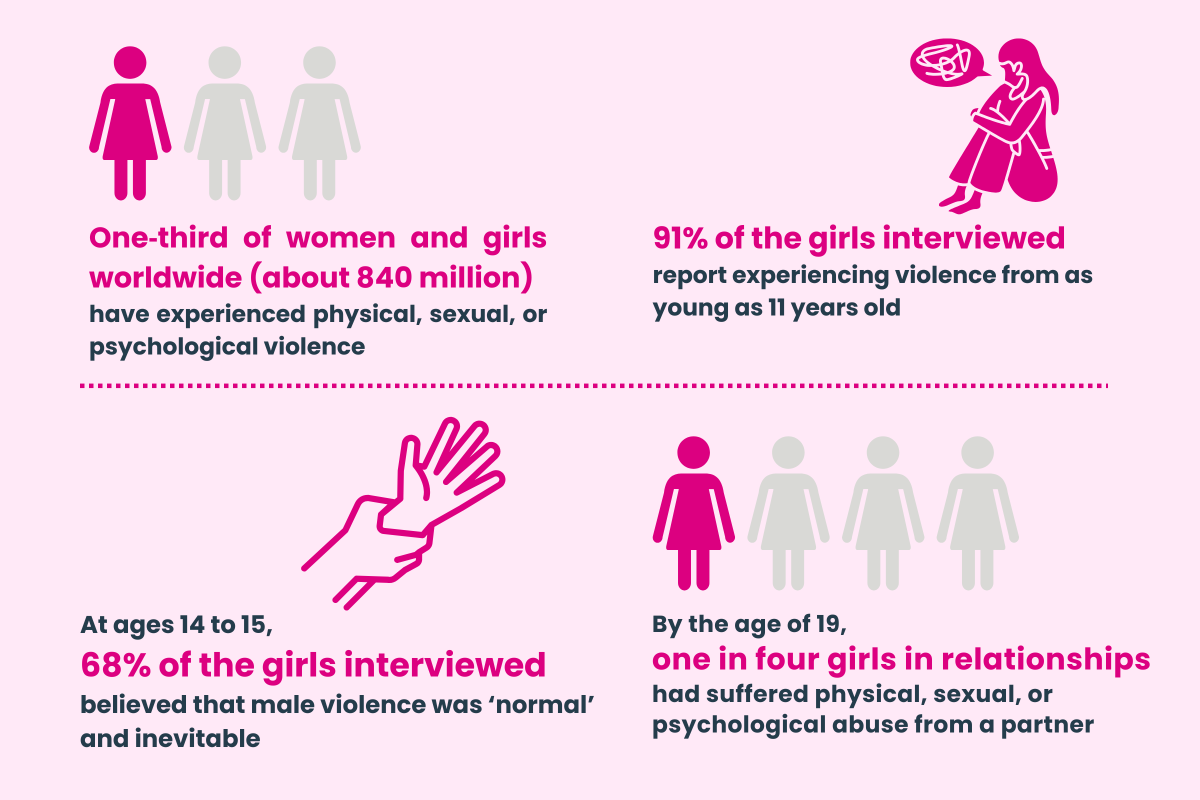
Worryingly, 68% of girls at ages 14 to 15 believe that male violence is “natural” and feel that male aggression is an inevitable part of life. This perception reinforces gender inequality, further legitimising harmful beliefs such as “a husband has the right to beat his wife,” and directly increases their risk of experiencing intimate partner violence. Among interviewed girls who had been married or in a relationship, by the age of 19, one in four had suffered physical, sexual, or psychological abuse from a partner. This reflects the severity and prevalence of the problem, leaving girls not only with deep psychological trauma but also facing threats such as early pregnancy.

Jennifer (pseudonym), a 17‑year‑old girl from Guatemala, once dreamed of becoming a doctor. However, at the age of 14, following her parents’ divorce, she hastily married in search of love and security. After marriage, she not only suffered violent abuse from her partner but also became pregnant within the same year. By 15, she was already a mother—her opportunity to pursue her dreams stripped away.
Harmful Gender Norms Distorting Self‑Worth
Why is violence perceived as normal? Research indicates that this stems from rigid gender norms. In traditional patriarchal cultures, men are often regarded as the dominant figures in society and the family, with power and control seen as integral to masculinity. Under such subtle yet pervasive influences, violence becomes gradually rationalised, women are treated as objects to be controlled, and their bodily autonomy is taken away.
Adolescence should be carefree for girls, yet gender‑based violence forces them to confront the harshness of the world prematurely. They hear stories among peers of girls their age being harmed, and fear gradually becomes part of daily life. Sheila, a 17‑year‑old girl from Uganda, shared: “I was almost raped one time. Those men had staged themselves and were waiting to assault me. Fortunately, someone I knew happened to pass by and saved me just in time.”
Self‑Protection as a Burden – Restricting Girls’ Lives
Girls are not only placed in vulnerable positions but are also forced to shoulder the burden of “self‑protection” alone. Research shows that more than half of girls in early adolescence believe it is their personal responsibility to protect themselves, and by late adolescence this rises to nearly 70%. This internalisation of responsibility compels girls to limit where they go, how they dress, and who they spend time with, further depriving them of personal freedom.
Even more troubling is that society and families often shift the blame for violence onto the victims, claiming that girls are harmed because of “improper behaviour” or “provocative clothing.” This culture of victim‑blaming intensifies the psychological pressure girls face when confronted with violence, making it harder for them to report incidents or seek help.
Promoting Gender Equality Education, Ending Violence
Plan International affirms that adolescence should never be defined by fear. When violence is normalized, girls are stripped of their freedom, boys lose their sense of identity, and society forfeits its future. For many years, Plan International has worked to challenge harmful norms, reshape men’s perceptions of women, and advance gender‑equal education—ensuring that girls, boys, adolescents, and parents cultivate a culture of respect and equality. At the same time, we are committed to empowering girls to speak out with courage in defence of their bodily autonomy, to establish boundaries, and to resist sexual harassment and gender‑based violence. In doing so, we enable them to grow up safely and with dignity, truly embracing an adolescence that is defined by exploration, opportunity, and the pursuit of dreams.

Kakarika, a 24‑year‑old from Togo, grew up witnessing girls being mocked and harassed. Through Plan International’s training, he realised that such social attitudes place girls at risk of violence. He said: “As a boy, I also have a responsibility to protect girls and to bravely oppose injustice.”
Plan International continues to deliver a broad spectrum of programmes across developing countries, leveraging education as a powerful catalyst to eliminate gender discrimination and prejudice, cultivate cultures of mutual respect, and support girls and women in confronting the risks of gender‑based violence. Through dedicated girls’ rights initiatives, we enable young women to recognise their inherent rights to bodily autonomy and freedom from sexual violence, empowering them to safeguard themselves and reduce their vulnerability to harassment, assault, and exploitation.
In regions affected by armed conflict and natural disasters—such as Sudan, Togo, Ethiopia, and Bangladesh—we have established women‑friendly spaces that provide psychological support, education, and life‑skills training. These safe environments enable girls to rebuild their lives while safeguarding them from gender‑based violence, equipping them with the knowledge to identify risks, report incidents, and seek assistance.
At the same time, we are creating youth‑friendly spaces in diverse communities, offering training on gender equality and positive masculinity. These programmes strengthen adolescents’ awareness of equality and actively encourage young people—both boys and girls—to become advocates for change, working together to build safer, fairer, and more respectful societies.
By 2024, more than 32.03 million girls and boys worldwide had benefited from our sexual and reproductive health and rights education programmes, underscoring the global impact of our commitment to equality and empowerment.
